
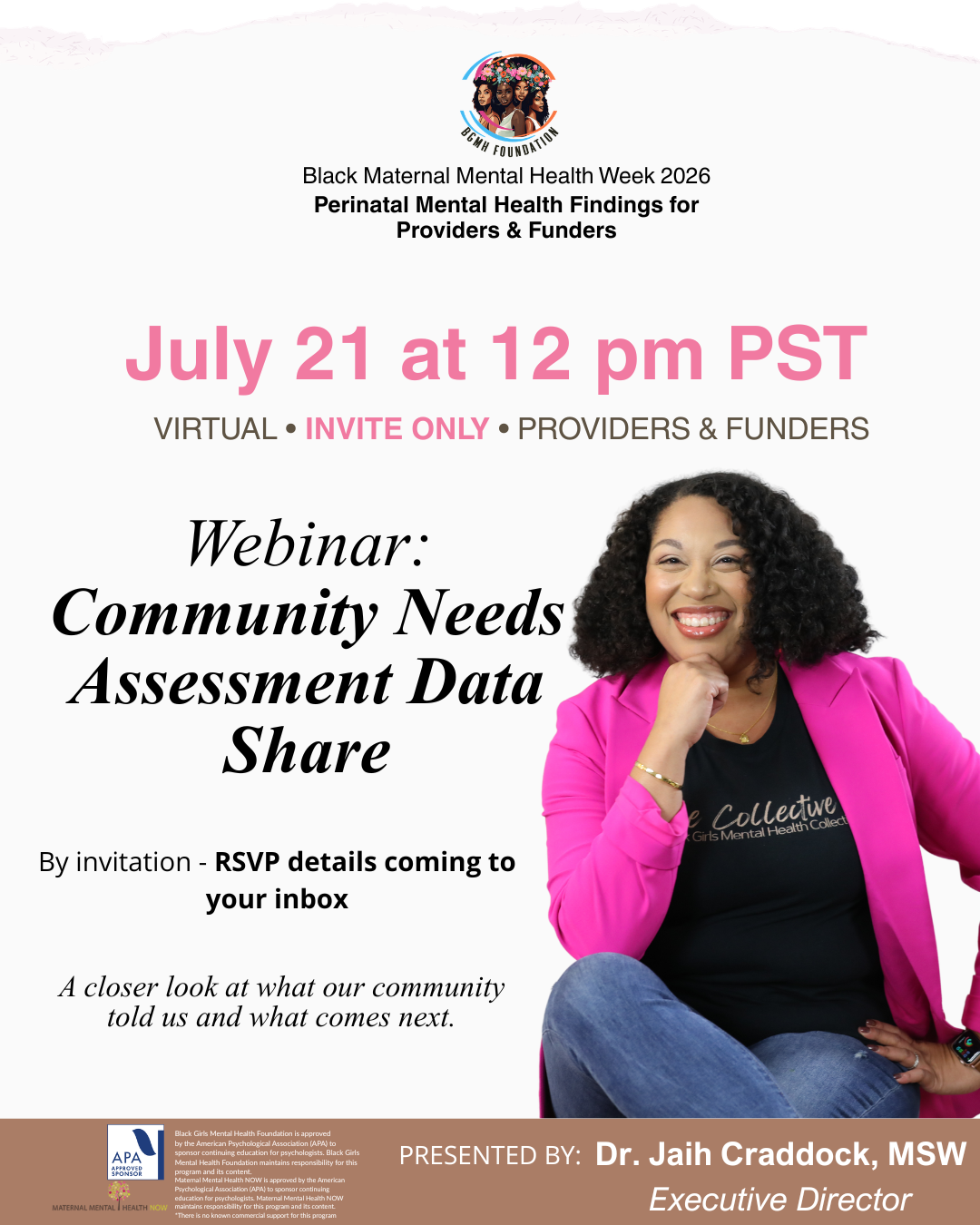
The data behind the mission, straight from the people we serve.
We're sharing first look findings from our community needs assessment on perinatal mental health, gathered directly from the mothers and families we serve. This isn't a report built in a vacuum. It's built from what our community told us, in their own words, about where the gaps in care actually are.
Tuesday, July 21, 2026, 12:00 to 1:00 PM PST, virtual, for providers and funders
Mental health conditions are the leading cause of maternal mortality in the United States, and Black women bear a disproportionate share of that burden. This session brings together two years of original community data, 366 respondents in 2025 and 305 respondents across 16+ states in 2026, to show what's actually happening for Black birthing people: who is being screened, who is being believed, who is getting the Black provider they asked for, and who isn't. You'll walk through the national and California-specific landscape, the year-over-year shifts in emotional well-being and screening gaps, and the structural barriers, cost, childcare, stigma, lack of culturally sensitive resources, that keep people from getting care even when they know they need it. We'll also cover how these findings directly shaped real programs: a free therapy voucher program, peer support groups, a provider training institute, and system-level partnerships across California. This isn't data for data's sake. You'll see how qualitative narratives and community storytelling turn numbers into accountability, and leave with specific, actionable asks depending on your role, whether you're a practitioner, funder, or policymaker.
By the end of this session, you'll be able to:
Name at least three ways the current healthcare system is failing Black birthing people, backed by data
Describe the gap between what community members are asking for and what the system currently provides
Identify at least two structural interventions that respondents identified as most needed
Apply specific, role-based actions (as a practitioner, funder, or policymaker) to close the access gap
Expect data, qualitative narrative, and space for reflection and Q&A throughout.